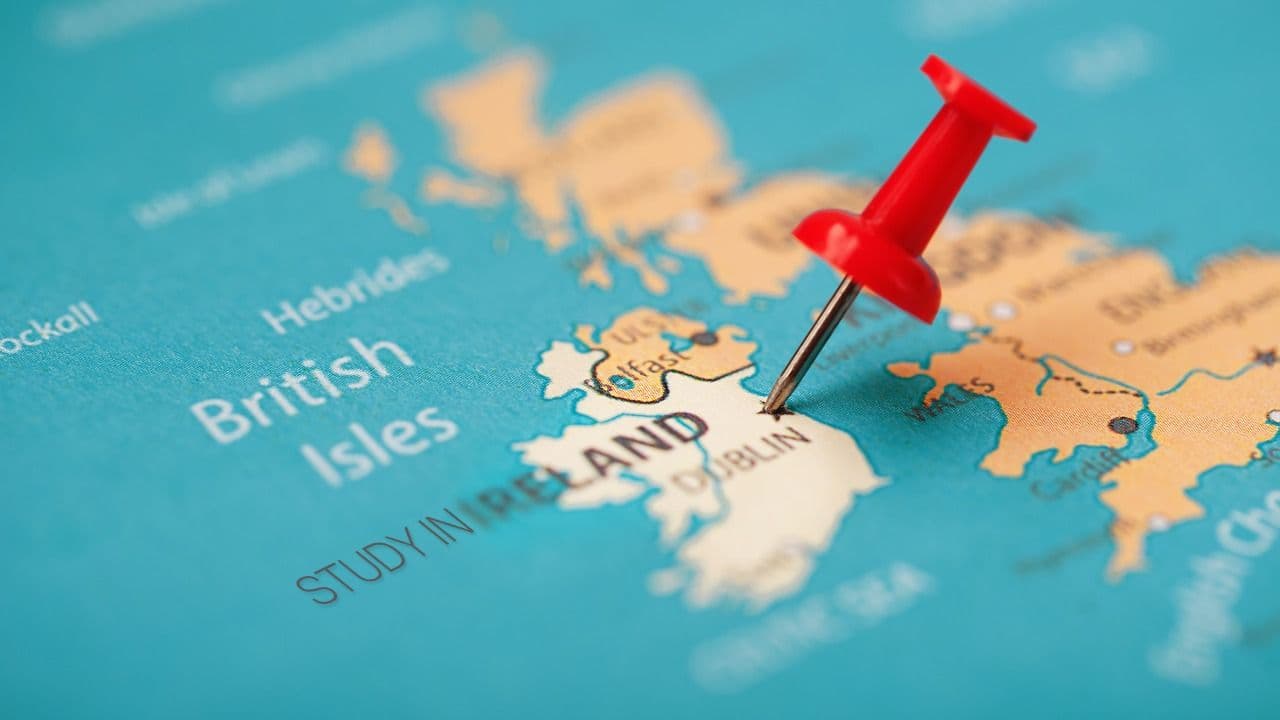
Choosing to study in Ireland places you in one of the world's most dynamic, safe, and welcoming countries. With universities renowned for research and innovation and as a European hub for global tech and pharmaceutical giants, Ireland offers a world-class educational experience with a clear path to a global career.
However, understanding the visa process is a critical first step. This article is designed for International students applying for the Stamp 2 (Study Visa), and the first thing you should know about is that the Ireland student visa costs €60 for a single entry and €100 for multiple entries. With this visa, you will be able to work up to 20 hours per week during academic terms. Another exciting aspect of the Irish student visa is that during official holiday periods, specifically from June to September and from 15th December to 15th January, you are allowed to work full-time, up to 40 hours per week, thereby helping you manage expenses.
Curious to find out further details? Read on, and we will walk you through every stage, from the latest rule changes to the final document checklist, ensuring you submit a complete, accurate, and confident application.
Ireland Student Visa Latest News 2026
Staying updated with the latest regulations is crucial for a successful application. For 2025, the Irish government has clarified its key policies to ensure students are fully prepared for their time in Ireland.
Financial Proof Requirement: The Irish Immigration Service (INIS) requires that all non-EEA visa-required students must show proof of access to €10,000 for their first year of living expenses. This is the official estimated cost of living for a student for one academic year.
IRP Card Replaces GNIB: In a move to modernise its systems, the official registration card for non-EEA residents is now the Irish Residence Permit (IRP) card. The term 'GNIB card' is outdated. You will apply for your IRP card only after you have arrived in Ireland.
Types of Ireland Student Visas It is important to understand the different visa ‘stamps’, as they define your permissions in Ireland
- Visa Type- Stamp 2 (Study Visa)
What it is? The main long-term study visa granted to students enrolled in a full-time programme that appears on the official ILEP-approved list.
who it's for? International applicants applying from their home country for a Bachelor’s, Master’s, or PhD programme
- Visa Type- Stamp 1G (Graduate)
what it is? The Post-Study Work Visa, officially called the Third Level Graduate Scheme. It allows graduates to seek employment in Ireland.
who it's for? Graduates who have completed their degree in Ireland and want to gain valuable international work experience.
- Visa Type- Stamp 'C' (Short-Stay)
What it is? A visit visa for short-term courses lasting less than 90 days. It does not allow you to work.
Who it's for? Students enrolled in a short summer programme, language course, or executive training
The Step-by-Step Ireland Student Visa Process
This section breaks down the application into a logical, chronological sequence. Meticulously following each step is the key to a successful outcome.
Step 1: Get Your Acceptance Letter
Your journey begins with an unconditional Letter of Offer from an Irish university. This is non-negotiable. Crucially, the course must be listed on the government's official Interim List of Eligible Programmes (ILEP). This list confirms that your chosen course is approved for student visa purposes.
Step 2: Pay Your Tuition Fees
You must demonstrate your commitment by paying your first year's tuition fees. A receipt of this payment is a mandatory document. Official guidelines state you must show proof of payment for the full fee or at least a minimum of €6,000 if the total fee is higher.
Step 3: Prepare Your Financial Documents (The €10,000 Rule)
This is the most scrutinised part of your application. You must prove you have unrestricted access to €10,000 for living expenses. Source of Funds: This can be shown through a 6-month bank statement from your own or a sponsor's account or an official sanction letter for an education loan from an approved bank. Traceability is Key: The funds must be traceable. A large, unexplained lump sum deposited just before applying (known as ‘funds parking’) is a major red flag and a common reason for rejection.
Step 4: Write Your Letter of Application (SOP)
This is your chance to speak directly to the visa officer. Your Statement of Purpose (SOP) must convincingly explain: Your reasons for choosing Ireland and this specific course, linking it to your past education and future career goals. A clear statement confirming your understanding of the financial commitment involved. Proof of your strong ties to your home country (family, property, future job offers) and your unwavering intent to return after completing your studies.
Step 5: Apply Online via AVATS
All applications must be initiated through the official online portal, the AVATS Online Application Form. Fill out every section accurately. Double-check all details like your passport number and name, along with your spelling, before submitting, as errors can cause significant delays.
Step 6: Submit Documents & Pay the Fee
After completing the AVATS form, you will book an appointment at your nearest VFS Global centre. VFS is the official partner for Irish visa facilitation in many countries. At your appointment, you will submit your biometrics (fingerprints and photo), hand over your physical documents, and pay the visa application fee.
Ireland Student Visa Document Checklist
Use this checklist to ensure you have gathered every required document before your VFS appointment.
• Passport (current and all previous passports, valid for at least 12 months after your planned arrival date) • Two recent, compliant passport-sized photos • Signed AVATS Application Summary sheet • Letter of Acceptance from an ILEP-approved college • Receipt of Tuition Fee Payment • Financial Proof (e.g., 6-month bank statement showing €12,000, education loan letter) • Letter of Application (SOP) • Proof of Medical Insurance (minimum coverage of €25,000 for accidents and medical emergencies) • All Academic Transcripts and Certificates • English Proficiency Test Scorecard (IELTS, TOEFL iBT, or PTE Academic)
Ireland Student Visa Cost
The table below outlines the official government fees associated with the Ireland student visa application. These fees are non-refundable, even if your application is rejected.
Fee TypeCost (Single Entry)Cost (Multiple Entry)Visa Application Fee€60€100IRP Registration Fee (Payable in Ireland)€300€300
Note: These government fees do not include the variable service charges levied by VFS Global, nor do they cover your tuition or living costs.
Ireland Student Visa Processing Time The standard duration for an Ireland student visa processing time is 4 to 8 weeks, starting from the day your application is lodged at the VFS centre. However, this is an estimate. During peak seasons (May-August), processing can take longer due to high volumes. To avoid stress and potential delays, AECC strongly advises you to apply at least 3 months before your intended travel date.
Common Reasons for the Ireland Student Visa Rejection
Understanding why applications fail is the best way to ensure yours succeeds. Here are the most common reasons for refusal: • Insufficient or Untraceable Funds: This is the primary reason. You must not only show the required €10,000 but also prove its legitimate origin over a six-month period. • Weak Letter of Application (SOP): A generic SOP that fails to convincingly articulate your student intentions and your commitment to returning home will be rejected. The visa officer must be convinced you are a genuine student, not a potential immigrant. • Gaps in Study/Work History: Failing to provide a clear and evidence-backed explanation for any gaps of more than a few months between your education or employment. • Course Not on ILEP: Submitting an application with an acceptance letter for a course or institution that is not on the government's approved list.
What Happens After You Arrive in Ireland? . After You Arrive in Ireland: What’s Next?
Your visa sticker allows entry, but you are not fully registered yet.
1. Book Your GNIB/IRP Appointment
Do this immediately, especially if you’re in Dublin, as slots fill quickly. Once registered, you’ll receive your Irish Residence Permit (IRP) your main ID in Ireland.
2. Open a Local Bank Account
This becomes easier once you have your IRP.
3. Apply for a PPS Number (Personal Public Service)
Essential for working part-time and managing taxes.
4. Always Carry Key Documents
Including: • IRP card • Passport • University offer letter • Tuition fee receipt • Medical insurance • Proof of accommodation These are useful during travel and emergencies.
Securing an Ireland student visa is a detailed but manageable process. The keys to success are meticulous preparation, absolute financial transparency, and a compelling, honest Statement of Purpose. By focusing on the €10,000 financial rule, proving your intent to return home, and applying well in advance, you can confidently navigate the application and unlock an exceptional educational and cultural experience in the heart of Europe. Ready to start your Irish journey? Talk to an Aspirant wave counsellor for free, expert Guidance
